- SalesforceChaCha
- Posts
- 💃 AI Ready Or AI Theater? 🕺
💃 AI Ready Or AI Theater? 🕺
Hygiene beats hype

Salesforce ChaCha
May 07, 2026 • Estimated Reading Time: 3 minutes
Good morning, Salesforce Nerds!
Every executive wants AI in their Salesforce org. The board wants the slide. The CEO wants the press release. ✨
Then reality lands.
Agentforce sits at roughly 5.3% adoption across the Salesforce customer base. Gartner expects 60% of AI projects to be abandoned this year for lack of AI-ready data. The agents are not broken; the orgs underneath them are. 😅
Readiness is not a license toggle. It is the org hygiene work your platform team has been deferring for years, suddenly cashed in at the worst possible moment.
Four pillars decide whether your AI initiative ships value or ships embarrassment: data quality and lineage, metadata and schema hygiene, permissions and the Trust Layer, and context surface and observability. 🤖
Get them right before you flip any flags. 👇️

TABLE OF CONTENTS
💃 AI Ready Or AI Theater? 🕺
GARBAGE IN, CONFIDENT GARBAGE OUT
DATA YOU CAN ACTUALLY TRUST
The Atlas Reasoning Engine cannot tell that an Account with three duplicates and a 2019 phone number is wrong. It reasons over all three. The output sounds right and is wrong. 🔥
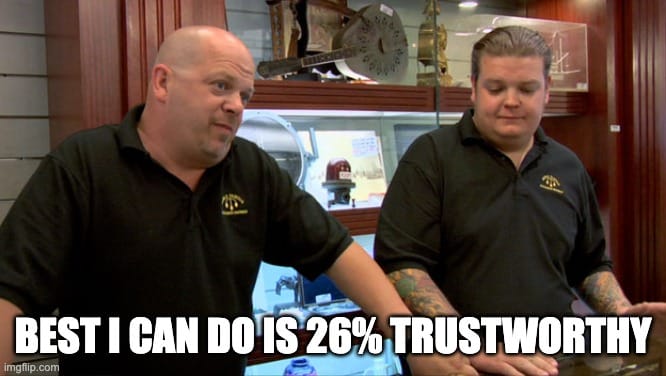
Salesforce's 2026 Data and Analytics Trends report puts 26% of organizational data in the untrustworthy bucket. A March 2026 Cloudera and Harvard Business Review study found only 7% of enterprises consider their data fully ready for AI.
Quality is half the problem. Lineage is the other half.
An agent that surfaces a Lifetime Value figure should point at the source object, the calculation logic, and the last update timestamp. If you cannot answer those questions for your top ten KPIs today, your agent will invent provenance with the same fluency it invents facts. 🤖
The remediation is unglamorous: matching rules tuned for fuzzy company names, validation rules enforcing standards at entry, scheduled deduplication runs, and a named owner per critical field. 🧹
✅ Audit ready: Top objects scored on completeness, accuracy, consistency, validity, and uniqueness; remediation tickets opened for anything below 90%.
❌ Audit unready: "We have a data quality initiative on the roadmap for next year."
YOUR SCHEMA IS THE PROMPT
METADATA IS DOCUMENTATION
Agents read your schema the way a new hire reads an org chart. Field labels, descriptions, picklist values, and help text become the working vocabulary of every prompt the agent assembles. 📚
A field labeled field_c__c with no description tells the agent nothing. A picklist of Type1, Type2, Type3 forces the model to guess.
Multiply that across a 1,200-field Account object and the agent is operating on guesswork. 😬
The Apex describe layer is where the metadata actually lives:
Schema.DescribeFieldResult dfr = Account.AnnualRevenue.getDescribe();
String label = dfr.getLabel();
String description = dfr.getInlineHelpText();
If description returns null for half your custom fields, your agent's vocabulary has holes. 🕳️
Hygiene work for this pillar: enforce field description requirements through metadata reviews, retire unused custom fields, standardize picklist values, and document every object that will ground an agent. Treat your schema as AI training material, because functionally that is exactly what it is. ✏️
BAD PERMS, BIGGER PROBLEMS
PERMISSION SPRAWL GETS AMPLIFIED
The Einstein Trust Layer enforces zero retention with LLM providers, masks PII before prompts leave the platform, and respects your sharing model. Dynamic Grounding retrieves only the information needed for a prompt, and only if the user has access to it. 🛡️
It does not fix bad permissions.
Agentforce agents operate within the user's permission model. They respect field-level security and cannot access data that the user cannot access. However, agents can aggregate and analyze accessible data in ways that might surface insights users couldn't directly query. ⚠️
A profile with overly broad read access was a slow leak before. With an agent attached, it becomes a faucet. 💧
Least privilege moves from best practice to prerequisite. Build agent-specific permission sets, apply Restriction Rules to constrain agent reach, require human approval for high-stakes actions like pricing and contract changes, and audit agent invocation rights quarterly. 🔐
Run Salesforce Health Check before any AI initiative goes live. Anything below the standard baseline is a launch blocker, not a roadmap item.
MEASURE OR PRAY
CONTEXT AND OBSERVABILITY
The average enterprise runs 897 applications, and only 29% are connected. An agent grounded only in Sales Cloud answers questions like an employee who never reads email. 📡
Context surface is the inventory of what the agent can actually see. Which objects are grounded in Data Cloud, which knowledge articles are vectorized, which external systems are reachable through MuleSoft or Named Credentials, and which fields are explicitly excluded. Most teams cannot produce this list on demand. 📋
Observability is the second half. Agentforce Command Center surfaces agent activity, the Einstein audit trail logs every prompt and response, and Event Monitoring captures access patterns. None of it works if no one is looking. 👀
Hallucination rates range from 3% to 27% depending on configuration, grounding data, and prompt design. The difference between those ends of the range is whether anyone is measuring. 📊
Required instrumentation: agent inventory with declared scope and owner, audit trail review on a defined cadence, dashboards on hallucination and toxicity signals, and a documented rollback procedure for every deployed agent.
AUDIT BEFORE YOU AUTOMATE
THE READINESS DIAGNOSTIC
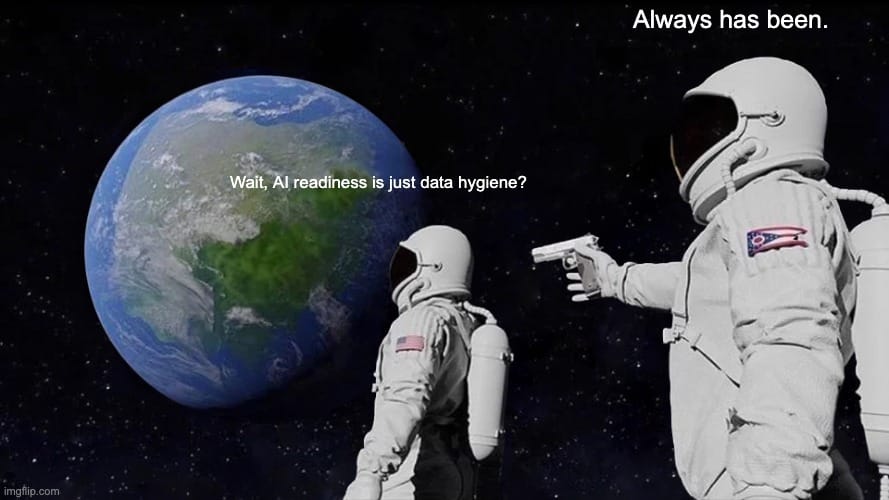
AI readiness is not an AI project. It is a hygiene project that AI exposes. ⚠️
The data debt, permission sprawl, and metadata rot quietly tolerated for years become the dominant constraint the moment an autonomous agent touches your org. Every shortcut on data quality, every "we'll document it later" custom field, and every overly permissive profile gets converted into an agent failure mode. 🎢
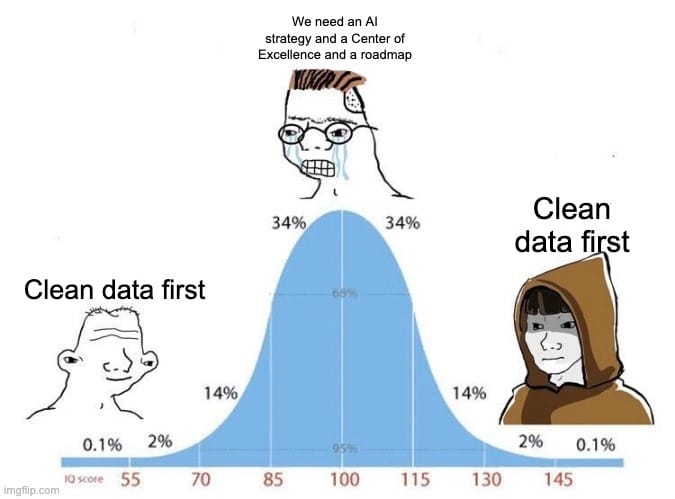
Before approving the next AI initiative, run a four-pillar readiness audit. Score each pillar honestly. Anything below acceptable becomes remediation work; anything red becomes a launch blocker. 🚦
The orgs that win with AI in 2026 are not the ones that bought it first. They are the ones that prepared for it best. 🎯
SOUL FOOD
Today’s Principle
"Quality is never an accident; it is always the result of intelligent effort."
and now....Salesforce Memes
What did you think about today's newsletter? |